

What is an Inland Container Depot (ICD)? And the Difference from a Container Freight Station (CFS)
- What is an Inland Container Depot?
- Why are Inland Container Depots important?
- Advantages of Inland Container Depots
- Differences between Container Freight Stations (CFS) and Inland Container Depots (ICD)
Inland Container Depots (ICDs) play a vital role in the shipping industry. A robust ICD network can save freight forwarders, shipping lines, and shippers significant amounts of money. They provide inland shippers with facilities to handle cargo locally. You can easily manage loading and unloading operations for containers at an ICD before transporting them to the port. This allows for better planning of the freight process and reduces the likelihood of cargo being held up at the port due to customs issues. Furthermore, it helps avoid detention charges levied by carriers. However, demurrage and detention fees are not inherent charges; they arise from delays in handling cargo caused by port congestion, delays, or labor shortages. While these are uncontrollable factors, you can take steps to mitigate them.
One such method is using Shipper-Owned Containers (SOC), which eliminates concerns about unexpected demurrage and detention charges.
What is an Inland Container Depot?
An Inland Container Depot (ICD), also known as a dry port, is a container storage facility located inland, far from any major seaport. Many shipping companies store their containers at an ICD before transporting them via the port. ICDs are connected to ports by rail and road networks. When storing goods, these facilities perform all necessary audit processes and require relevant documentation. Additionally, ICDs help inland shippers and consignees access port services closer to their locations. This enables them to handle cargo at their own factories or warehouses—thereby reducing port congestion when storage space is limited.

You might confuse an ICD with a container yard (which is usually very close to the port) because both serve similar functions. The only difference is that an ICD is located inland, whereas a container yard is near the port. According to our latest report, 40.4% of industry experts believe container yards will remain congested this year with tight stacking space. This could lead to increased demand for and utilization of ICDs in inland areas.
Why are Inland Container Depots Important?
Inland Container Depots help freight forwarders and shipping lines reach more customers in inland regions. For example, ICDs play a huge role for shippers in landlocked US states by providing facilities to arrange cargo departure. Moreover, organizing cargo internally and delivering it to the port saves time for both forwarders and clients.
Functions of an Inland Container Depot
- Container Storage: Where do containers go after arriving at the destination port? Or where do they come from before reaching the port? ICDs provide storage facilities for various transshipment points. You can even store your specialized cargo at an ICD. However, it's best to confirm beforehand if the ICD can accommodate your specific container and cargo types.
- Customs Clearance: Every shipment requires customs clearance. Most freight forwarders try to prepare necessary documents before containers arrive at the port for shipment. This helps reduce shipping costs and aids in better freight planning. As mentioned earlier, ICDs offer most of the same services as ports, including customs clearance for cargo containers.
- Maintenance and Repair Facilities: Even the sturdiest containers can get damaged during transit. Without inspection, damage can cause significant financial loss for container owners and users. Therefore, before you transport containers to the port, ICDs can also provide inspection and repair services.
Advantages of Inland Container Depots
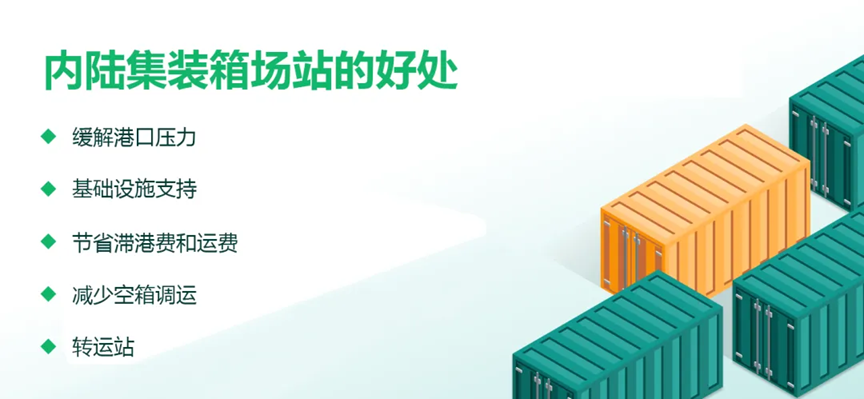
Freight forwarders and shippers are well aware of demurrage and detention fees. When exceeding the free time for using Carrier-Owned Containers (COC), you must pay these fees to the shipping line. These charges accumulate daily and can easily exceed $100 per day!
For container owners, repositioning empty containers is highly uneconomical. The shipping industry loses over $20 billion annually due to empty repositioning. To reduce this phenomenon, Inland Container Depots provide facilities for Less than Container Load (LCL) consolidation in inland areas and offer cost-effective storage for empty boxes. Owners can rent out their empty containers and hand them over to users via ICD facilities. But how do you find users for your containers?
Differences Between Container Freight Stations (CFS) and Inland Container Depots (ICD)
| Container Freight Station (CFS) | Inland Container Depot (ICD) |
| In most cases, CFS locations are very close to the port entrance. | ICDs are located inland, far from major seaports. |
| Primarily used for consolidation and deconsolidation of cargo. Mostly handles LCL shipments. | Mainly used for Full Container Load (FCL) shipments and connects via road and rail transport. |
| The main function of a CFS is to alleviate port congestion. It also serves as a connection point for rail and road transport. | Helps you utilize customs-related services and handles cargo consolidation and storage. |


